Religion and the Media Could Raise Consideration for Others
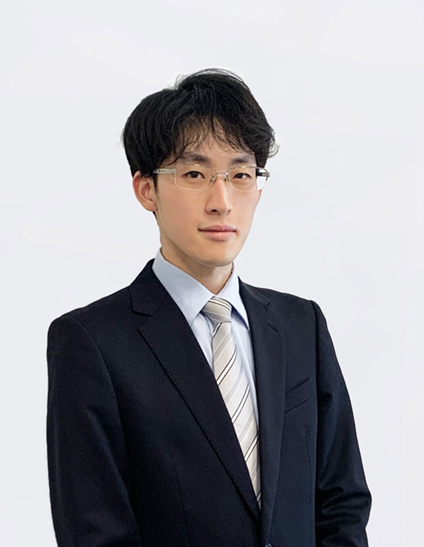
by Hajime Ozaki
Buddhism and the mass media share the potential for playing a positive social role.
They can turn people's eyes to what they cannot see for
themselves and open their minds to consideration for others.
It seems to me that the Japanese these days have lost interest in others whom they usually don't see. They don't show compassion, and they don't even dare to know the sufferings of people far from them. These are the same people who so easily shed their tears over the film Departures (original Japanese title Okuribito) or exclaimed "I was really moved. They gave me an emotional boost. I was encouraged," when they watched Japan win the World Baseball Classic. That's fine. They may have good reasons to be so moved.
What bothers me, however, is the wide gap between this sort of enthusiasm and their indifference to the outside world. I don't recall when, why, and how the Japanese started to show excessive expressions of excitement. But one thing is clear to me. Now it's quite easy to move the Japanese by dramatic events if they are highly visible, while it's all too difficult to open their eyes to invisible things. How many Japanese, I wonder, are concerned about the agony of the people in Darfur, Sudan? How many of them paid attention to the atrocity that was taking place in northern Sri Lanka? How many of them are aware that over a billion people around the world live on less than one U.S. dollar a day? How many of them actually extend helping hands to such people?
This does not just involve events happening in the rest of the world. The widening economic disparity within Japan and the marginalization of the socially disadvantaged would go unnoticed by the vast majority of Japanese were many of them not among the victims. The former prime minister who initiated policies that led to the disparity was very popular until the nightmare of several hundred thousand people suddenly losing their jobs became a reality. The random killings of a series of innocent citizens in Tokyo's popular Akihabara district, the nursing home fire in Shibukawa City, Gunma Prefecture, that killed ten elderly residents-if such crimes and accidents had not taken place, the issue of working and living conditions for the nation's large numbers of temporary workers, or the pitiful situation of not being able to ensure the safety of homes for the elderly living on government assistance, would not have attracted public interest.
The Japanese have hardened into an inward-looking people over the period since the "lost decade" of the 1990s, which started with the bursting of the economic bubble and has continued into the twenty-first century, as if to counter what some see as the progress toward globalism. Troubling phenomena are occurring around the world, from fears that vital national interests will be lost to the advance of globalism, to nations and their citizens turning protectionist and nationalistic. According to a Japanese university professor I spoke with recently, the average college student of today shows no interest in studying abroad, and regarding Japan's leading ally, the United States, there are more than a few who have an attitude he describes as "beyond anti-American, it is contempt for America." There are strong feelings against former U.S. president George W. Bush, who paved an unfortunate road to an expansion of international terrorism when he stepped over the line by going to war against Iraq in response to the terrorist attacks on the United States of September 11, 2001. Japan's former prime minister Junichiro Koizumi worsened relations with the neighboring countries of China and South Korea when he made an official visit to Yasukuni Shrine in Tokyo, where the nation's war dead are enshrined, including some designated as Class A war criminals following World War II. These perhaps are among the causes for what is in Japan's case a tendency to isolate itself from the world.
This trend to face inward is not limited to relations between Japan and the rest of the world, however. Even within Japan people have lost their feelings of solidarity and have become indifferent to those whose circumstances are different from their own. Perhaps it is because economic opportunities have diminished, or perhaps it is because of problems involving education at home or at school, or maybe it is caused to some degree by the coverage in the media. I do not think any single element is to blame. Whatever the case may be, Japanese society-the ordinary people who make up that society-has in the past twenty years or so gradually lost the sense of caring for others.
Since the "Lehman shock" of September 2008, when the huge international investment bank Lehman Brothers suddenly collapsed, a slight change seems to have occurred in Japan when people of many different backgrounds offered helping hands to the part-time and noncontract workers who had unexpectedly lost their jobs. In a park that is within walking distance of both the Imperial Palace, the home of the emperor and empress, and Ginza, Tokyo's fashionable shopping district, a camp was set up by nonprofit volunteers to offer jobless workers a temporary housing arrangement and meal service over the New Year's holiday. In Gunma Prefecture, where I work, many Brazilians of Japanese descent have been working in the automobile plants and other factories. When local Christian churches offered meals and places to live to the many who recently lost their jobs and company housing, that was big news.
The plight of noncontract and part-time workers has been publicized throughout Japan, but I have not seen or heard anything about priests from Buddhist temples or Shinto shrines pitching in to help them. I have no recollection of seeing any report of that sort in the past few months.
Unfortunately, it is extremely rare for Buddhist or Shinto priests to play an active role in humanitarian assistance, or for them to work to correct social inequities. The more traditional the religious organization, the more it appears to shun actively providing assistance to those in society who need it.
The priests are seen only when they conduct annual services for such occasions as welcoming in the new year and the summer Bon Festival of the dead, or at formal ceremonies such as funerals and weddings. They do not speak out or take a stand against social injustice, social inequity, or violations of human rights. There is a good reason that Buddhism is sometimes contemptuously referred to as "funeral Buddhism," meaning that many people turn to it only for conducting rites for departed loved ones.
In 1982 a dispute arose in Kyoto, Japan's ancient capital, over a new tax to be levied on temple visitors. The mayor of Kyoto at the time announced his intention to tax the entrance fees charged by the temples. Famous temples, including Kiyomizu-dera, had been collecting several hundred yen per head for operations and maintenance. Needless to say, the temples opposed the mayor's plan. The clerics claimed that because visiting temples is a religious act, taxing such visits violated religious freedom and was therefore unconstitutional. Many of the so-called tourist temples threatened to close their gates to visitors, and the two sides came to an impasse.
What method did the priests use so the citizens of Kyoto and temple visitors could hear their side of the argument? They turned to the media. They held press conferences to appeal to the public and express their viewpoint. They provided information to the media only when it suited them. They are not civil servants, so they even were not truthful when it was to their advantage. When elections are scheduled in Japan, the candidates move out-of-doors to make public speeches, trying to garner voter support for as long as their voices hold up, but the priests had too much pride to expose themselves in that way. Perhaps they did not want to appear to be pleading their case before the citizenry. At any rate, they were never seen actually out in the streets of Kyoto directly explaining their position to the people. The only way to interpret this, it seemed to me, was that they were waving the banners of vested rights and privilege and using the means most useful to them for attaining their objective.
I was in Kyoto at the time, covering the dispute between the temples and the mayor, and I was disappointed in the priests' attitude. Public opinion did not support their efforts to close the temples, which are an important part of Japan's cultural heritage.
Around that same time, I went to Italy for the first time, to cover the World Day of Prayer for Peace, a gathering of world religious leaders on October 27, 1986, presided over by Pope John Paul II. There were churches in every city center I visited, and they were all open to the public. I had thought an entrance fee would be required at Saint Peter's Basilica in the Vatican, which was not the case. I learned Italy is quite different from Japan.
I am not trying to idealize the Christian system. I do not think that Japanese society, which consists of Buddhist and Shinto values superimposed on traditions of animism and ancestor veneration, is inferior to societies based on Christianity or other great religions. Nor do I think that the Japanese are lacking in religious sentiment or beliefs. They may not be converting to monotheism or know how to read the Buddhist sutras, but I do not think we can say that the vast majority of Japanese are therefore atheists.
It is just that in Japan religion does not function as a moral guide for society. For most people, religion does not provide a set of values that they can follow as an ethical standard. While Japanese society has many ancient traditions, the role that religion plays in the nation's life is one of decidedly low priority.
Societies that are overexposed to religion can bring about intolerance of others, I feel certain, so I do not think it is desirable to attach too much importance to religious values only. Since the end of World War II, however, the traditional religious organizations in Japan, and the leaders affiliated with them in particular, have distanced themselves too greatly from society, and they seem to be in a state of near withdrawal. It appears that they are so afraid of being hurt or misunderstood that they have given up working directly with society.
Religion and the media have different basic functions, of course, but it seems to me that they share the potential for playing a positive social role. They can turn people's eyes to what they cannot see for themselves. Appealing to public sensitivities, they can open their minds. In these ways, consideration for others can deepen, and people may begin to work toward the realization of a society where citizens help each other. For this to happen, however, we need religion to become more visible.
The media are also due some criticism. They also suffer from diminished influence. The reasons are probably the same. The media are resting on the laurels of past performance, on what they consider their vested rights and privilege, and are too removed from the sensibilities of the average citizen.
While events in the world and people's thinking are constantly changing, people are forced to listen to the same "song" over and over again. How long will it be before we tire of it? Maybe it is all as simple as that. Perhaps some tunes need to be repeated. But if they are not sung in a way that reaches people's hearts and minds, then the way they are being sung should change.
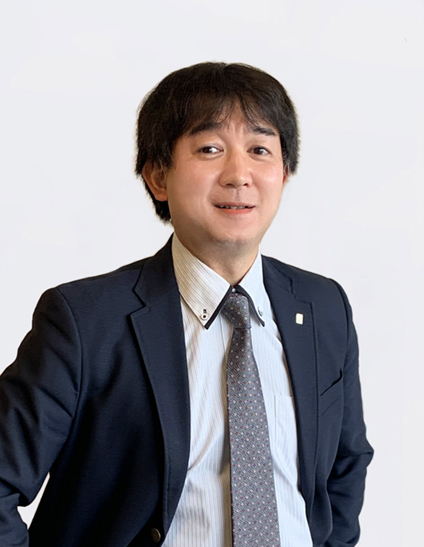
Hajime Ozaki reported mainly on global affairs and multilateral diplomacy from Israel and the United States as a Kyodo News correspondent for more than twenty years. Back in Tokyo he covered the 9/11 attacks in the United States at the foreign news desk until he was assigned to the Geneva bureau. Since December 2007, he has been serving as the Maebashi bureau chief in Gunma Prefecture.
![]()
Home
Copyright (C) 1997-2010 by Kosei Publishing
Co.
All rights reserved.