Bodhisattva Practice and Lotus Sutra-Based New Religions of Japan:

The Concept of Integration


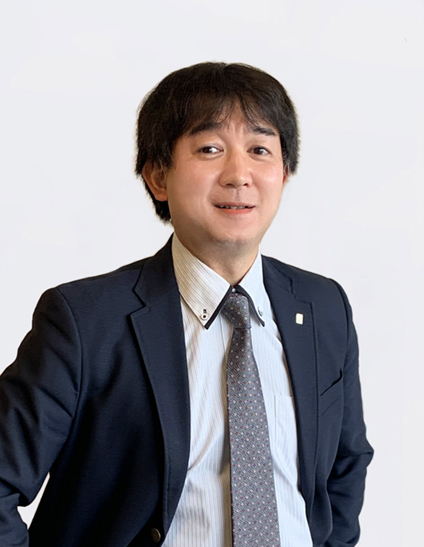
by Susumu Shimazono


New religious organizations in Japan today clearly reveal that
Buddhism has retained its influence on modern Japanese society.


Lay Buddhist Movements in Modern Japan

It is widely said that the Japanese people have no religion or that they have abandoned their religious traditions in the process of Westernization. Buddhist temples have been accused of having lost their religious energies and of conducting only funerals and related services since early modern times. In fact, modern Buddhist movements in Japan are playing great roles in the political, economic, and social spheres. This is the result of Buddhist organizations living up to their philosophies and ways of living, which in turn influences the thoughts and behavior of the people. Thus, new religious organizations in Japan today clearly reveal that Buddhism has retained its influence on modern Japanese society.

These modern religious movements vary in character. The most influential were established during the early nineteenth century and have doctrines different from the traditional religious organizations. They are collectively called New Religions, and can be largely divided into Buddhist-inspired and Shinto-inspired groups. An overwhelming majority of Buddhist-oriented New Religions are based on the Lotus Sutra and Nichiren Buddhism. They include Soka Gakkai, by far the largest in membership; Rissho Kosei-kai, the second largest in membership, emphasizing a peace movement and interreligious cooperation; Reiyukai, which has given rise to other religious organizations of laypersons; Myochikai, under the Reiyukai umbrella, which places an emphasis on social activities; Honmon Butsuryuko, the first of the Buddhist-oriented New Religions; Hoonji Temple, successor to Bukkyo Kanka Kyusaikai, which was considered a remarkable case of socially engaged Buddhism; and Nihon-zan Myohoji Temple, which has striven to propagate its doctrine overseas and to promote its peace movement. In parallel to these New Religions, there have been Kokuchukai, established by Chigaku Tanaka; Toitsukaku, by Nissho Honda; and others as influential movements targeted at Buddhist monks and intellectuals.1

Although these religious organizations and movements have carried on much of the Lotus Sutra tradition of Nichiren Buddhism, the ways they have succeeded and developed vary. Considering that so many religious organizations that are based on Lotus Sutra/Nichiren Buddhism have developed in modern Japan, a need naturally emerges to identify the points that many of those religions have in common, to examine the characteristics of them, and to explain the reason for their development.

It is useful to note the ideological characteristics that many New Religions have in common with the ideological characteristics of the traditions of the Lotus Sutra and the Nichiren sects that they have succeeded. Three elements appear to be important, namely, a concept of integration through horizontal solidarity, an emphasis on helping people to become self-reliant, and a this-world orientation.

Features of Lotus Sutra/Nichiren-School Buddhism Adapted to Modern Society

Integration through Horizontal Solidarity
At present, the people's sense of solidarity has been lost, and there are divisions and conflicts within and among classes, nations, and religions that we should attempt to overcome through solidarity on the horizontal level instead of through hierarchic relations. In general, religions seeking salvation have an inclination toward integration through horizontal solidarity.2

Two important characteristics of salvation religions are that they awaken in individuals an awareness of their identity and promote integration through horizontal solidarity. Such a concept is needed in an age when new political and social orders are being formed. In modern times, capitalism spread globally with Western colonialism, and the concept of the nation-state divided the world. It was an age when a concept of horizontal integration was sought in lieu of the conventional idea of hierarchical integration. In other words, individuals, faced with new types of differences and diversity, began to seek a vision of horizontal integration anew.

The Lotus Sutra arose from the Mahayana movement, which taught a belief in bodhisattvas in an effort to narrow the gap between monks and lay followers. Comparing bodhisattvas with the Hinayana ascetics called sravakas and pratyekabuddhas, distinguishing among the three vehicles (the Bodhisattva Vehicle, teachings not only for oneself but to lead others to the level of enlightenment; the Sravaka Vehicle, teachings transmitted directly from Shakyamuni Buddha with the aim of attaining enlightenment for oneself; and the Pratyekabuddha Vehicle, teachings to attain enlightenment by oneself that are not directly transmitted by the Buddha), and noting the diversity of the many sutras and doctrines preached by Shakyamuni Buddha, the Lotus Sutra attempts to integrate them beyond their differences into the One Vehicle of the Buddha's true teachings, through which all followers can reach enlightenment.

Along with the development of the Mahayana tradition, doctrines, sutras, organizations, and relationships with society branched out in different directions, leading to disunion within the Buddhist community. While taking into consideration how these differences and conflicts widened and deepened, the Lotus Sutra evolved a unique philosophy as to how the integration of Buddhism and society could be restored. Belief in the One Vehicle of the Lotus Sutra could integrate the whole Buddhist world and thus build one religious community. This belief exerted a great influence on the Lotus Sutra Buddhism of T'ien-t'ai Chih-i in late-sixth-century China as well as on the traditions of various Buddhist sects originating from the Tendai sect, which was founded in Japan by Saicho (767-822).

Nichiren (1222-82) saw that unity had been lost and the Buddhist community was divided into various organizations under various sects. He attempted to reintegrate the Buddhist organizations under the Lotus Sutra. In ancient Japan, all Buddhist sects were, in principle, integrated under the major temples around Nara and Kyoto. However, when the power of the Heian court collapsed and rival clans of warriors took control of the land, pessimism resulting from the teaching of the Latter Day of the Law became prevalent. The Latter Day of the Law comprises the last of the three periods of Buddhism following Shakyamuni Buddha's death, when his teachings are believed to fall into confusion and lose the power to lead people to enlightenment. Buddhist organizations created by independent recluse monks increased. The advent of the Jodo (Pure Land) sect by Honen, who attempted to exclude all practices except for chanting nenbutsu (a prayer to Amitabha) following armed conflicts in Kyoto, made people think that Buddhist teachings could not control the chaos in society. There was also the impending danger of a Mongolian invasion.

Under such circumstances, Nichiren thought that only a belief in the Lotus Sutra would be able to restore the integration of Buddhist organizations and rescue the nation from crisis. He also thought that it would restore the Japanese state in the face of the attempted invasion by Kublai Khan. It was the desire for horizontal integration among people who were engaged in bodhisattva practice that would enable such integration to happen. Nichiren attempted to redirect the strong orientation toward integration described in the Lotus Sutra into the reintegration of the state and the Buddhist community in an age of crisis.

It is easily understood that the tradition of integration based on the horizontal solidarity of Lotus Sutra/Nichiren Buddhism has inspired the populace in modern Japan. Indeed, New Religions based on Lotus Sutra/Nichiren Buddhism have become conspicuous for presenting methods of integration. The concept of integration through religious solidarity has at times been in harmony, and at other times in conflict, with that of national integration, and both concepts, influencing each other, have contributed to the formation of the concept of spiritual integration in modern Japan.

The Principle of Self-Reliance
The term principle of self-reliance (jirikishugi), which was coined by Shigeru Nishiyama in 1990, expresses the characteristic of the New Religions in the Lotus Sutra/Nichiren tradition that as practitioners of the bodhisattva way, people should take part in religious, social, and political activities.

Salvation religions are meant for everyone, and they place stress upon self-reliance as an important factor in attaining salvation. This concept was contained to some extent in ancient Buddhism, but it was the Mahayana concept of the bodhisattva that developed the potential to its full scale. With bodhisattva practice, the principle of self-reliance places stress on respecting the positive participation and practice of laypersons.

The concept of bodhisattva practice occupies the central position in the Lotus Sutra, which describes ideal followers as those who ardently accept, read, chant, explain, and transcribe the Lotus Sutra, strongly advocating that they withstand suffering and help the suffering people around them to attain salvation. The images of the bodhisattva who suffers because of his faith (chapter 13 of the Lotus Sutra), the bodhisattva who tries to find something to respect in each person (Bodhisattva Never Despise), and a number of bodhisattvas that emerge from the earth following the teachings of Shakyamuni as the Eternal Buddha were considered to be ideal models for followers of the Lotus Sutra.

Nichiren attempted to live up to the ideal image of the bodhisattva as described in the Lotus Sutra. He believed that he embodied the life of a bodhisattva, and he persuaded others to follow his way of putting his belief into practice. He preached right living and righteous faith and devoted himself to saving the people and the country. In the course of his activities, he was confronted with many hardships, and he asked himself why he had to go through such hardships; he finally realized that it was because he was a bodhisattva with an extremely important mission. He taught that people should follow the path of a bodhisattva. Nichiren insisted that by chanting Namu Myoho Renge-kyo (I take refuge in the Lotus Sutra), people could embody the true character of the Buddha in themselves and thus be enabled to stand on their own feet and go forward as Buddhists.

The principle of self-reliance in Lotus Sutra/Nichiren Buddhism presented a symbolic resource that the leaders and followers of New Religions in modern Japan could follow. As the process of modernization advanced, it became increasingly necessary for individuals to become aware of being bearers of their own destinies, that is, to have self-identity and responsibility as individuals, and the principle of self-reliance of Lotus Sutra/Nichiren Buddhism must have been very encouraging for them. They chose their faith and lifestyles and intended to overcome hardships themselves. Then they chose to speak about their experiences with others in order to help them become self-reliant and to persuade them to explore their lives with a sense of mission.

This-World Orientation
The opposite of this-world orientation is other-world orientation, or the denial of this world. In religions, particularly in salvation religions, the existence of the other world, which is quite different from this world, is usually assumed. The concept of salvation often accompanies a vision that one will relate with a divine being in a realm beyond the limits in this world, especially beyond death. The realm different from this world, for example, may be the other-world after death or the state of tranquillity (nirvana) beyond the world of transmigration. Supposing the existence of the sublime realm, this world is given a negative value and characterized as being filled with wrongs and sufferings. In salvation religions in which asceticism in line with the orientation of denying this world is considered the ideal for clergy, the salvation concept means emancipation from this world.

However, in Japanese New Religions, there is a strong inclination toward seeking salvation here within this world. This view of salvation is characterized as a "vitalistic view of salvation" (Tsushima et al., 1979). Considering that God, the Buddha, and the universe are the source of life, people consider themselves to be saved if they can live a happy life in this world by being united with the Great Source of Life and blessed with good health. They seldom show any interest in the other world. They are more concerned about their individual and group life in this world and are actively involved in improving their lives. In the explanation of integration based on horizontal solidarity, a reference was made to interest in daily life, and this interest is inseparable from the tendency of this-world orientation.

In traditional Japanese Buddhism, the Pure Land sects show a conspicuous trend toward an other-world orientation. In particular, as Buddhism came to be increasingly involved in conducting funerals and memorial services, the tendency of Japanese Buddhism toward other-world orientation was strengthened. On the other hand, interest in this world continued to exist in Japanese Buddhism, which was derived from esoteric Buddhism and the Tendai Hongaku (Original Enlightenment) philosophy, and this tendency occupied a strong position in the Lotus Sutra/Nichiren Buddhist tradition. One expression of this-world orientation is interest in divine favor in this world. In the Lotus Sutra, promises that people can become free from turmoil in this world frequently appear. They include an emphasis on meritorious deeds and on salvation from all kinds of sufferings (chapters 25, on the bodhisattva Kannon, and 26, on dharani, or the mystic Buddhist formula). In the Lotus Sutra, one is supposed to seek enlightenment and nirvana in this world while interacting with others. A typical example is found in chapter 20, on the bodhisattva Never Despise, which depicts a monk who venerates all people he meets for their potential to become buddhas.

This-world orientation became quite strong in Nichiren Buddhism. By introducing the chanting of the daimoku, practices as instructed in the Lotus Sutra, including remembering its teachings, were simplified and made easier. At the same time, greater importance was given to the ideas that divine favor could be realized during one's lifetime and that buddhahood could be attained in this world. The simplification of practice was based on the interpretation of Chih-i's doctrine of the "three thousand realms in a single thought." Here the foundation of the salvation theory was established. Texts such as the Kanjin honzon sho (The object of worship in contemplation) by Nichiren were developed on the theory of this-world-oriented salvation.

It is easy to understand that the this-world orientation in the Lotus Sutra/Nichiren tradition found sympathy among modern Japanese who are interested in improving their destinies and in contributing to the solution of common problems. New Religions in the Lotus Sutra/Nichiren tradition have positively advocated the realization of divine favor and meritorious deeds and have taught that each individual can be reborn through these practices to live a new life in this world. They encourage people to address common problems while positively interacting with others so that they can live a fulfilled life.

Interrelationship among the Three Concepts
These three concepts are interrelated. The vision for integration based on horizontal solidarity is related to the principle of self-reliance, which is linked to this-world orientation, and this naturally has a tendency to bring religious values closer to home. This-world orientation is often connected with the tendency of people to share matters of common interest, since it aims to address the problems in their daily lives as religious problems that need to be fixed in order to improve their lives.

The three concepts are deeply related to the bodhisattva practices. When focusing on religious practices, the principle of self-reliance is the most deeply related to bodhisattva practices. But the three are also deeply related to the concept of integration through horizontal solidarity and this-world orientation because they relate to people's daily lives and bring about religious integration while people are still involved in the problems in this world. An analysis of the characteristics of modern religious movements focusing on the tradition of Lotus Sutra/Nichiren Buddhism would reveal several notable aspects of the bodhisattva practices.

Integration through Horizontal Solidarity in Lotus Sutra/Nichiren-Related New Religions

While being influenced by nationalism, by practices intended to facilitate participation in society, by a criticism against authoritarian hierarchic social relations, and by individualism and egocentrism, New Religions presented a new integrated vision based on horizontal solidarity and gained people's support. In the following sections, the emphasis placed on matters of daily interest, nationalism, and participation in society are examined.

Emphasis on Matters of Daily Interest and Talking about Personal Experiences
The representative movements of Lotus Sutra/Nichiren-school Buddhism during the Meiji period (1868-1912) were Honmon Butsuryuko and Kokuchukai. As both were established in the same period and both followed the same Lotus Sutra/Nichiren-school Buddhism, they naturally had much in common. When compared, however, they are found to present distinct differences. The leaders of both movements emerged from Lotus Sutra/Nichiren-sect lay associations in the Tokugawa period. Honmon Butsuryuko evolved as a mass movement, while Kokuchukai developed as an ideological movement, mainly among intellectuals. While Honmon Butsuryuko emphasized the pursuit of divine favor in this world with a strong tendency toward privatism focusing its attention on matters of daily interest, Kokuchukai (Association of the State Pillar), as its name suggests, focused on the integration of the nation and the development of the religious sect (Nichiren organizations) as its major concerns, with little interest in problems of people's daily lives. Kokuchukai, which became independent but maintained both partner and rival relationships with the Nichiren sect, has never developed into a mass-movement religious organization. Therefore, if Kokuchukai can be called a New Religion, it should be placed outside the mainstream on the whole New Religion map.

The New Religions that were established later have more points in common with Honmon Butsuryuko. After the late Taisho period (1912-26), people-centered organizations became more concerned with practical problems in daily life. The two most powerful organizations are Reiyukai (and its offshoots) and Soka Gakkai. The concept of integration through horizontal solidarity plays a great role in these organizations. Along with the formation of a national society, the awareness of individual independence, equality, and solidarity as members of the nation was strengthened among the Japanese populace. Against such a social background, Lotus Sutra/Nichiren-school New Religions promoted their activities through nurturing the sense of solidarity among members by sharing troubles and happiness in the daily lives of the followers. Most notable were small-group activities and the sharing of personal experience.

Small-group activities that had begun as the activity of such lay associations as Hokkeko and Daimokuko in the Tokugawa period were placed in the center of the religious activity of the lay-centered Honmon Butsuryuko. Nissen Nagamatsu, its founder, apprehended that the current state of the Buddhist community as led by priests, especially the Nichiren sect, was suffocating Buddhist belief in its true sense and oppressing solidarity among lay followers. He attempted to build a network of solidarity based on associations of lay followers instead of on temples led by priests. The horizontal network of organizations of lay followers and religious practices conducted therein laid the foundation for the later mass movements of the sect. Honmon Butsuryuko played an important role in forming the concept of lay Buddhism.

Small-group activities by lay followers expanded explosively in and after the 1920s in both Reiyukai (and its offshoots) and Soka Gakkai. One of the driving forces of that development was an activity in which people talked about personal experiences. Reiyukai encouraged its members to talk about their experiences, teaching that they could understand the core of religion only through experience, and saying that anyone could take part in horizontal solidarity by sharing experiences. A little later, Soka Gakkai also encouraged its members to create value in their lives while building horizontal solidarity through roundtable meeting activities. The outstanding characteristic of Lotus Sutra/Nichiren-school New Religions is that they allow their followers to maintain their consciousness as religious followers and are committed to horizontal solidarity.

Nationalism as a Vision of Integration
As stated above, one characteristic of New Religions is emphasis on people's daily lives and the followers' participation in activities through talking about their experiences. There are aspects of individualism that emphasize people's own experiences and the realization of their happiness and that require individuals to make efforts to realize their happiness. Interest in the pursuit of divine favor in this world and in the solution of conflicts in everyday life is prominent in Honmon Butsuryuko and other New Religions following Lotus Sutra/Nichiren Buddhism. They are related to the principle of self-reliance. Reiyukai and Soka Gakkai also have the vision of ultimately integrating society by working toward the realization of the ideal world. In this respect, these New Religions are inheriting the horizon explored by Kokuchukai.

The nationalistic vision of integration in Lotus Sutra/ Nichiren-school New Religions stems from Nichiren, who advocated the salvation of the nation through the Lotus Sutra at the critical time just before the Mongolian attack on Japan. With the conviction that the unification of religions was required to overcome the crisis, Nichiren put forward a proposal for national integration and rescuing the state by the Lotus Sutra. Behind his belief was the sense of crisis stemming from the feeling of pessimism that arose from the theory of the Latter Day of the Law. There was, on the other hand, a future-oriented utopia-like sense of time (Sueki, 2000). After the Meiji period, this tradition was reactivated by movements such as Kokuchukai, led by Chigaku Tanaka, and as a result, Lotus Sutra/Nichiren Buddhism became one of the main bearers of religious nationalism in modern Japan. Tanaka considered the "ordination platform of Honmon" as the "national ordination platform" and put forth his vision to save the state and build an ideal society by establishing it firmly. A little later, Toshizo Nishida founded Bussho Gonenkai (1906-18) and taught that saving the state and realizing the mission of the state should be achieved through conducting ancestor worship based on the Lotus Sutra.

The prewar movement of Soka Gakkai had an underlying vision of the millennium and strove to create an ideal world through the construction of the national ordination platform. However, this vision was not publicly announced because of the prewar social situation. This was also true with Reiyukai, which has inherited the philosophy of Nishida almost entirely. In considering the characteristics of New Religions, it is important to note that the two movements had the same vision before the end of World War II-that the relief of the state can be achieved through the integration of horizontal solidarity under Lotus Sutra/Nichiren Buddhism. After the 1930s, the whole nation was mobilized under State Shinto, and the vision of the salvation of people and the world by the emperor-centered state prevailed. During this period, Lotus Sutra/Nichiren-school religious movements were accumulating the philosophical resources that would provide the vision of integration based on horizontal solidarity, which was different from the vision of State Shinto.

After World War II, Lotus Sutra/Nichiren-school New Religions made great advances, and in the process, the nationalistic integration vision played an important role. In both Soka Gakkai and Reiyukai, the idea that true Buddhism would prevail and that the state would be saved through their movements played a large role. But needless to say, the ideological climate after the war was greatly changed. Soka Gakkai has poured much energy into political activities, and because of this, its vision of integration through the state as a medium has been maintained and given a concrete image. Even so, the objective of the organization has tended to be the expansion of its political forces in actual politics, and its vision to save human beings has lost ground. In postwar New Religions, the vision of integration based on horizontal solidarity was sought for dimensions that cannot be achieved by salvation through the state. That is a vision of integration through society.

Integration through Society
As members of society, religious organizations adapt themselves to society or oppose it while being pressured and influenced by it; at the same time, they gain opportunities to be positively involved in solving various problems in society in their own ways. Typical examples are conducting welfare and charity activities, contributing to education and medical care, and peace movements. In the 1900s, Christian organizations presented abundant activity models in these fields. Traditional Buddhist organizations also began to carry out various social activities. Then New Religions such as Tenri-kyo began social activities on a small scale. The Lotus Sutra/ Nichiren-school movement widely conducted relief activities at times of war and natural disasters as well as long-term charitable social activities. However, these activities were not part of the main field of activities of the religious organizations.

Already in the second decade of the 1900s, there was a budding movement among New Religions under the Lotus Sutra/Nichiren school that attempted to pursue horizontal solidarity in society, rather than developing solidarity among their own groups and people around themselves or aiming to achieve their vision of the millennium using the state as an intermediary step. A remarkable example was Bukkyo Kanka Kyusaikai (Buddhist Influence and Relief Association), which would later develop into organizations such as Hoonji and Daijokyo. Tatsuko Sugiyama, its founder, considered support activities for needy people and suffering people outside the community of those who shared the same faith to be an essential part of religious activities. She was earnestly engaged in relief activities ranging from attempting to heal lepers through faith healing and supporting hospital management to managing social welfare institutions for disabled children and others and establishing educational institutions for social welfare workers.

The activities of Bukkyo Kanka Kyusaikai can be seen as responses to the social problems that became apparent in large cities after the 1890s and more seriously in the early 1900s. In these decades, gaps between landowners and tenant farmers and between capitalists and laborers expanded, slums in cities increased, girls endured wretched working conditions in factories, and the miserable conditions of the families of deceased and invalid soldiers became apparent. The government gave greater attention to relief activities and at the same time expected the private sector to provide social service activities also. The government, however, was cautious about religious groups, gaining greater numbers of followers and supporters by preaching divine favors such as healing diseases, and the authorities sometimes controlled the activities of religious groups. This suppression may be a reason underlying Sugiyama's promotion of relief activities in partnership with medical institutions. Sugiyama and her successors, Hitoshi Murakami and Shugaku Suzuki, were eagerly engaged in caregiving, as they considered their service to be a practical act of bodhisattva practices through which they could train themselves as bodhisattvas. The care activity of Bukkyo Kanka Kyusaikai was passed on to Hoonji Temple, which Suzuki succeeded after World War II, and has continued to date.

After World War II, large-scale welfare or environmental improvement activities and peace movements were begun by many religious organizations. The most notable in terms of scale is the peace movement by Rissho Kosei-kai and Myochikai, which is inseparable from religious cooperation activities. The antiwar and anti-A-bomb movements during the Korean War and the Cold War between East and West in the 1950s led to the rise of nationwide peace movements that developed to express the nation's will to rebuild Japan as a peace-oriented state. New Religions, in particular some of those in the Lotus Sutra/Nichiren school, played a great role in developing a groundswell for the peace movement by their religious cooperation in organizing movements.

Rissho Kosei-kai played a great role in the establishment of the World Conference of Religions for Peace in 1970 and its development in the following years. It launched the Brighter Society Movement and thus involved local branch organizations in peace and environmental activities. It was intended to expand the concept of bodhisattva practice to people outside the organization through interacting with nonmembers by participating in religious cooperation and community environmental activities.

At the beginning of the twenty-first century, Myochikai, while cooperating with the activities of the World Conference of Religions for Peace, launched moral education for children as a part of its international cooperation. Because of its exclusivist doctrine, Soka Gakkai does not participate in cooperation activities with other religious organizations. It chooses to expand its contact with society not only through the activities of its associate political party (New Komeito) but also through direct contact with the general public through its own activities. Peace is also a great theme for Soka Gakkai. It aims to contribute to world peace through the leader's outgoing international activities, exhibitions, and publications. These are typical contemporary examples of bringing about the vision of integration through horizontal solidarity that the New Religions of the Lotus Sutra/ Nichiren school have been pursuing.

Exclusivity and Toleration
In the Lotus Sutra/Nichiren Buddhist tradition, there is a tendency for subsect organizations to be divided into exclusive and intolerant groups regarding the diversity of thought and faith. Nichiren accused Buddhist sects in his day of reviling the teachings of the Buddha by not following the Lotus Sutra, which strongly urges people to have faith in that sutra rather than other sutras. It may be understood that the Lotus Sutra itself is exclusivist in nature. But although it places some teachings of Shakyamuni Buddha that have been conveyed in other forms at lower positions, this does not mean that the value of these teachings is totally denied but that they are recognized as being "skillful means." As such, both exclusive and tolerant positions have come to coexist in the integration vision presented by New Religions in the Lotus Sutra/Nichiren school. The exclusivist position is represented by Honmon Butsuryuko and Soka Gakkai, and the tolerant position by Hoonji, Rissho Kosei-kai, and Myochikai.

Both positions can be seen as responses to the disunion in ideology and values that became apparent in the process of modernization. One tendency looks at the vision of integration through horizontal solidarity as a means to develop solidarity among followers in the organization and to exclude those who do not positively enter the circle of solidarity. The other tendency is to consider that people outside the followers' groups should also be incorporated into the circle of their solidarity. The latter position is deeply connected with "cooperation" for the state or, in other words, the "cooperation" demanded by the state that was prevalent before 1945. Religious cooperation in Japan began with a tripartite meeting in 1912, when representatives from Shinto, Buddhism, and Christianity met together at the same table and began a dialogue. This was initiated by the government and by scholars who were cooperating with the government. Later, religious cooperation for peace and religious cooperation in support of war efforts by the state were both promoted. There were also cases of voluntary religious cooperation, but the great majority of the cases were led by the state and were carried out with the intention to achieve goals set by the state. The prewar experience provided the base for religious cooperation after World War II.

After World War II, voluntary cooperation among religious organizations was promoted. Reflecting the prewar suppression of religious activities by the government, religious cooperation was overshadowed by a fear of state control and nationalism. In particular, this fear was strongly shared among the affiliates of Shinshuren (Federation of New Religious Organizations of Japan), which was founded in 1951. An important point is that international religious cooperation was promoted through the activities of the World Conference of Religions for Peace and other groups. New Religions became aware of international society and have begun to pour great amounts of energy into interreligious cooperation activities and peace movements. Syncretized Shinto-oriented New Religions such as Oomoto and Konkokyo have made great contributions in this field, as well as Lotus Sutra/Nichiren-school organizations. It was a notable development in postwar days that their integrated vision of horizontal solidarity had evolved into expanding voluntary religious cooperation and activities in international society.

Uniqueness of the Concept of Integration Based on Horizontal Solidarity in Modern Japan

New Religions have carried on and further developed the concept of integration based on horizontal solidarity in the Lotus Sutra/Nichiren Buddhist concept of bodhisattva practice, which is an important element in the Lotus Sutra that was developed through Nichiren Buddhism and that bears the distinctive characteristics of Japanese Buddhism and of the modern age.

Characteristics of Japanese Buddhism Seen in the Integration Concept of New Religions in the Lotus Sutra/Nichiren Tradition
Buddhist organizations in other countries may place significance on faith and practice by lay followers, but one unique characteristic of Japanese Buddhism is that it places such great significance on the faith and practice of laypeople. The term lay orientation implies all the characteristics of the concept of integration through horizontal solidarity, the principle of self-reliance, and this-world orientation. The fact that the term already existed in Japan before modern times may suggest that it is a notable characteristic of Japanese Buddhism. The formation of lay orientation may have been related to the process of positive efforts to spread Japanese Buddhism among people while being influenced by the Lotus Sutra, Pure Land teachings, and esoteric Buddhism, and while promoting its spread through syncretization with Shinto.

The move to enhance the involvement of laypeople by removing the distinction between them and monks appears in historic documents from the Nara period (710-94), together with the names of Gyoki and En no Ozunu. The Pure Land and the Shugendo (mountain asceticism) traditions promoted their nonorthodox ways of training and practices for laypeople in respective directions, resulting in the relativization of the authority of those who had taken the tonsure. Nonpriests and nonlay leaders were developed in organized ways in Shugendo and in the Pure Land sects to meet the people's quest for salvation. Moreover, recluse monks in black clothing in the Kamakura period (1185- 1333) and Buddhist groups formed by recluse monks became widespread in other forms. It should be remembered that the wide prevalence of lay Buddhist followers has supported the development of Lotus Sutra/Nichiren Buddhism in Japan.

Nichiren himself did not encourage lay orientation. However, the trend to place emphasis on laypeople developed in the Nichiren tradition in the form of lay associations eventually called Hokke-ko and other names. The most active lay associations were the Happon subsect of the Honnoji Temple school of the Nichiryu line, and Fujimon-ryu of the Taisekiji Temple school of the Nikko line in Edo (Tokyo) and Kyoto toward the end of the Tokugawa period. Honmon Butsuryuko and Soka Gakkai both reflect this lay tradition. In the meanwhile, during the Tokugawa period, the tradition of the Nichiren sect was united with shamanism, and follower groups were formed around ascetics who responded to people's needs. Nyoraikyo, the earliest New Religion, was established by a woman in Atsuta in Owari Province (present-day Aichi Prefecture), a former servant in a warrior's house, who was strongly influenced by an ascetic of Nichiren Buddhism. The foundation of Reiyukai's movement was laid by Chise Wakatsuki, a female ascetic in Nichiren Buddhism, in cooperation with Kakutaro Kubo.

These lay associations of the two lines of Nichiren Buddhism have contrasting natures, in that one inherits its exclusive nature while the other inherits its tolerant nature and syncretism with Shinto. Even before the Meiji Restoration (1868), there were two lines of religious organizations aiming for horizontal solidarity by involving laypeople as participants, advocating both exclusivity on the one hand and tolerance on the other.

The development of the tradition of bodhisattva practice in the Lotus Sutra in the direction of nationalism is deeply related to the tradition emphasized in Japanese Buddhism of keeping the nation tranquil by reciting Buddhist prayers and conducting Buddhist ceremonies. Historically, this began with Prince Shotoku (574-622), who placed a premium on the Lotus Sutra; he was succeeded by Saicho and Nichiren, who emphasized the concept of protecting and saving the nation through the Lotus Sutra. Nichiren, in particular, warned Japan of the danger of Mongolian invasion and taught that the nation could be saved by the Lotus Sutra and through constructing an ideal Buddhist state. He redirected the concept of integration based on horizontal solidarity toward integration under the state. The fact that the Nichiren Buddhist tradition was so influential in Japan in the modern age of nationalism will not be understood without taking into account its concern for protecting and saving the nation.

As described above, the spread of lay-centered religious organizations and the strong interest in national integration in Nichiren Buddhism laid the foundation for the development of New Religions in the Lotus Sutra/Nichiren tradition. The concept of integration through horizontal solidarity upheld by those New Religions has evolved on the basis of the lay-centered Buddhist tradition, which is also concerned with national integration. Both the Lotus Sutra and Nichiren Buddhism put forward the integration concept based on horizontal solidarity. This can be understood as a part of the characteristics of bodhisattva practice, one of the central concepts of the Lotus Sutra.

Modernity of the Integration Concept of New Religions
Thanks to the advancement of printing techniques and school education, the formation and spread of a national consciousness reflecting a democratic political ideology became prevalent not only in Japan but also in various countries from the beginning of the nineteenth century onward. The vision of integration through horizontal solidarity and the vision contained in various New Religions have evolved in many entangled ways. A religious tradition emphasizing the subjectivity or self-reliance of the people may have found it easier to keep pace with democratic nation-states.

Among the New Religions of the Lotus Sutra/Nichiren school, very few organizations have developed away from the trend of nationalism. Among them, those that were founded and have developed rapidly between the 1920s and the 1960s have the strongest inclination toward nationalism. Typical are Reiyukai and Soka Gakkai. In these organizations, nationalism was associated with their vision of the millennium and was developed while competing with State Shintoist nationalism. The integrated vision of Lotus Sutra/ Nichiren Buddhism was based strongly on horizontal solidarity and was favorably accepted by people as a guiding principle to use in overcoming any crises confronting the nation. It is no wonder, therefore, that the integrated vision of New Religions contains abundant elements of nationalism.

In modern times, people have become increasingly aware not only of the existence of various religions and people within each country but also of the need for coexistence of all countries and cultures in the world. Religious organizations are required to show an awareness of being members of global society and also to display a religious spirit while coping with social needs. It is against the social background of modern times that the perception of religious diversity and the promotion of international cooperation for peace have come to occupy important positions in the New Religions of the Lotus Sutra/Nichiren tradition. These features were observed earlier in Bukkyo Kanka Kyusaikai. In postwar days, the concept of integration in diversity has developed in Rissho Kosei-kai, Myochikai, Soka Gakkai, and other religious organizations.

Finally, it should be noted that the integrated vision of horizontal solidarity of New Religions has kept pace with modern egalitarianism and progressive thought. One feature of Lotus Sutra/Nichiren-school New Religions is that they evaluate the development of modern times positively. Integration based on horizontal solidarity greatly affects their evaluation. They believe that people can attain direct access to the truth taught in the Lotus Sutra and involve themselves in the practice of genuine Buddhism because of the advancements made in modern times. On the other hand, the pessimistic view based on the concept of the Latter Day of the Law is also emphasized, warning that righteous Buddhism is not practiced in current times and that a crisis is growing. Contradictory as these two ideas may appear, they can be seen to be supporting each other in a state of delicate balance. While celebrating advances in the human spirit together with technological progress, these organizations also see the human tendency to become violent and to ignore the truth-against which genuine Buddhism should take a stand.

New Religions in the Lotus Sutra/Nichiren school can be understood as examples of a modern embodiment of Mahayana Buddhism, more specifically, its concept of bodhisattva practices. However, in order to fully understand this, its entire historical development must be considered from ancient times, when Mahayana Buddhism and the Lotus Sutra were conveyed to Japan through China, accepted in the Japanese style, and crystallized as Lotus Sutra/Nichiren Buddhism through the great efforts of such intermediaries as Saicho and Nichiren.

Notes

1. Toitsukaku is considered to be a movement within the framework of traditional Buddhism, while Kokuchukai is often classified as a New Religion, as it is highly independent from traditional Buddhism in both thought and organization.
2. The concept of "integration based on horizontal solidarity" is a common tendency in salvation religions at any time, but it gains greater adaptability in modern society. Characteristics of the "principle of self-reliance" and "this-world orientation" were not notable in salvation religions in premodern times and were observed in the tradition of only limited sects. Both are more adaptable to society in modern times.

References

Anderson, Benedict. Imagined Communities: Reflections on the Origin and Spread of Nationalism. London and New York: Verso Books, 1983.
Kanno, Hiroshi. Hoke-kyo no shutsugen: Yomigaeru Bukkyo no konpon shiso (The emergence of the Lotus Sutra: The revival of the fundamental philosophy of Buddhism). Tokyo: Daizo Shuppan, 1997.
---. Hoke-kyo nyumon (Introduction to the Lotus Sutra). Tokyo: Iwanami Shoten, 2001.
Matsuo, Kenji. Kamakura shin Bukkyo no seiritsu: Nyumon girei to soshi shinwa (The establishment of New Buddhism in the Kamakura period: Initiation rites and the legends of its founders). Tokyo: Yoshikawa Kobunkan, 1988.
Mukhopadhyaya, Ranjana. Nippon no shakai sanka Bukkyo (Engaged Buddhism in Japan). Tokyo: Toshindo, 2005.
Nishiyama, Shigeru, Yasuo Hata, and Yoshio Ujitani. Fukushi o kizuku: Suzuki Shugaku no shinko to fukushi (Establishing welfare: Faith and welfare of Shugaku Suzuki). Tokyo: Chuo Hoki Shuppan, 2005.
Otani, Eiichi. Kindai Nihon no Nichiren-shugi undo (The Nichirenism movement in modern Japan). Kyoto: Hozokan, 2001.
Pye, Michael. Skilful Means. London: Duckworth, 1978.
Sato, Hiroo. Nichiren: Ware Nihon no hashira to naran (Nichiren: I will become the pillar of Japan). Kyoto: Minerva Publishing Co., 2003.
Shimazono, Susumu. Gendai kyusai shukyo-ron (Salvation religion in contemporary society). Tokyo: Seikyusha, 1992.
Sueki, Fumihiko. Nichiren nyumon: Gense o utsu shiso (Introduction to Nichiren: Philosophy to strike this world). Tokyo: Chikuma Shobo, 2000.
Takagi, Yutaka. Nichiren: Sono kodo to shiso (Nichiren: His activities and thought). Tokyo: Hyoronsha, 1970.
Tamura, Yoshiro. Hoke-kyo: Shinri, seimei, jissen (The Lotus Sutra: Truth, life, and practice). Tokyo: Chuo Koron-sha, 1969.
Tsushima, Michihito, Shigeru Nishiyama, Susumu Shimazono, and Hiroko Shiramizu. "Shin shukyo no seimeishugi-teki kyu-saikan," (Vitalistic conception of salvation in New Religions). Shiso (Thought), no. 665 (1979). Abridged English version was published in Japanese Journal of Religious Studies 6, nos. 1-2 (1979).


Susumu Shimazono is a professor in the Graduate School of Humanities and Sociology at the University of Tokyo. His special fields are the comparative study of religious movements and the history of religion in modern Japan. He has also taught as a guest professor at universities in the United States, France, Germany, and Egypt. He is the author of numerous books on religion, spirituality, and bioethics.


This article was originally published in the July-September 2009 issue of Dharma World.


back

up

up

back

up

next


Home

Copyright (C) 1997-2010 by Kosei Publishing Co.
All rights reserved.

Privacy Policy