The Benefits of Buddhist Breathing Techniques
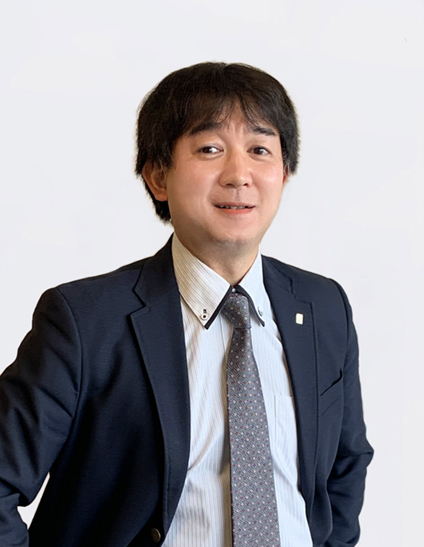
by Akikazu Takada
A renowned physiologist and Zen practitioner describes
why breathing, which is something we are always doing anyway,
should be so strongly connected with our minds.
When one begins training in Zen meditation, one is instructed rigorously in three activities--harmonizing the body, harmonizing the breath, and harmonizing the mind. One is taught the importance of having correct posture, of breathing properly, and of preparing the mind so that it is not unsettled.
The Correct Way to Breathe
So what, then, is correct breathing? And why should breathing, which is something we are always doing anyway, be so strongly connected with our minds?
The Zen master Somei Tsuji, who at first started Zen training as a lay practitioner, and then inherited the Dharma Lamp of Zen lineage, and who has given guidance to various lay practitioners, had a particular interest in the subject of breathing, and even published a book entitled Kokyu no Kufu (How to Breathe). In it, he teaches the importance of being able to slow down our breathing. He says that breathing slowly is of particular importance. Observing that most Zen monks, when practicing Zen meditation, allow more than a minute for each breath, he tells us to allow at least one minute per breath. But why is it so important to slow down our breathing? How is breathing connected with our minds?
Even Shakyamuni himself spoke of the importance of breathing. It is written as follows in the Samyuktagama, chapter 29, sutra 10:
"On one occasion, the Blessed One was at the Jetavana Monastery and spoke to the monks there. He said to them, 'Monks, it would be good for you to practice mindfulness of in-and-out breathing. Your bodies will not tire, your eyes will not ache, and you will be able to experience the pleasure of practicing observation meditation and learn to not become contaminated by ephemeral pleasures. Thus, when the technique for in-and-out breathing is pursued, it is of great fruit, of great benefit. Through it, one can advance to deep meditative concentration (samadhi), acquire a compassionate mind, silence all doubt, and enter a state of clear knowing (satori).'"
In other words, he says that if one breathes properly, the mind will become calm and will open up to enlightenment (satori).
Theravada Buddhist Breathing Technique
About breathing techniques, the same passage states, "Count your breaths with single-minded devotion, and patiently persevere in calming your breathing. Learn to breathe in and out by being mindful about counting breaths. Thus, just following this way, you will attain the cessation of your mind." Today the first thing one is taught when learning Zen meditation is the contemplation of counting one's breaths; Shakyamuni himself also stressed the importance of breath counting.
So then what did Shakyamuni teach about breathing in such a focused way, and about the importance of counting breaths? And how can modern medicine explain it? I would first like to discuss, from the standpoint of medicine, the meditation taught by Shakyamuni and preserved by Theravada Buddhism, as well as the importance of breathing in the practice of Mahayana Buddhism as well.
Among Shakyamuni's "Verses of Truth" (Dhammapada) is "He who has gone for refuge to the Buddha, the Teaching, and the Order penetrates with transcendental wisdom the Four Noble Truths." Shakyamuni also says that to eliminate suffering in the mind and body, to surely know the state of things, and to personally experience nirvana, one must practice four types of awareness (the "four fields of mindfulness").
The four fields of mindfulness are contemplation of the body, to be mindful of its impurity; of feeling, to be mindful that it is suffering; of the mind, to be mindful that it is impermanent; and of phenomena, to be mindful that they are devoid of self.
The way to truly practice these four fields of mindfulness is the meditation technique called vipassana. The "passana" part of "vipassana" means "to see," and "vi-" means "analytically." I would like to discuss how these things and breathing are related.
Breathing, the Body, and the Brain
When we tickle our own armpits we do not feel ticklish. If another person does the tickling, however, we feel ticklish. Why is this? Recently, it has become known that when we move our own bodies, the cerebellum, which is related to physical movement, suppresses emotions and feelings. We also now know that emotions and feelings are suppressed even at times when the results of the movement are anticipated.
When we tickle ourselves, it is done by moving our own fingers; since we know that we are doing this to ourselves, the sensation is blunted. On the other hand, if someone else does it, we can't anticipate it because it's not our action, and we feel it strongly.
In this way when we are aware of our bodies or move our bodies, it is not just our sensations, but also our feelings and emotions as well that become weaker. Put simply, it is difficult for someone to cry while running. When we're extremely sad or in pain, we stand still. Conversely, it's because of this mechanism that anxiety is thought to be alleviated by exercise.
In fact, it's the same for breathing. Putting one's whole mind into one's breaths means focusing one's senses on the activity of breathing. When we do this, a control stimulus goes out from the cerebellum, which governs respiratory movement, to the amygdala, the cingulate gyrus, and other structures of the limbic system, the brain's center for emotions; this in turn suppresses feelings of anxiety, distress, desire, and the like.
In vipassana breathing, one is instructed to inhale air fully into the abdomen and then let it out. When this is done several times, we become aware of the sensations of the belly expanding with the inhalation and contracting with the exhalation.
Next is to practice focusing awareness on the area of the abdomen and the chest, so as to distinctly sense the expanding and contracting of the belly. Then our movements are self-reported. That is to say, we tell ourselves, "My belly is expanding, my belly is expanding" and "My belly is contracting, my belly is contracting."
In vipassana meditation one must self-report activities such as moving the chest or walking (this corresponds to the contemplation of the body, one of the four fields of mindfulness). Such as saying, "I'm now raising my right leg," "I'm moving forward" and "I'm lowering my leg." This is applied to breathing, to try to eliminate delusions and attachments.
Breathing Techniques for Zen and Other Meditation Practices of Mahayana Buddhism
From the viewpoint of Mahayana meditation, this could be seen as being like trying to drive away idle thoughts with idle thoughts. However, the contemplation of the body is used in Zen practice as well.
The technique developed by the Zen master Hakuin, which he called Nanso no Ho, recommends an introspective (naikan) approach wherein the meditator visualizes a bolus-like object, approximately the size of an egg, balanced on the top of the head. It has a very beautiful fragrance and shape. The meditator visualizes it melting from his or her body heat, and the liquid slowly transferring into the body, flowing downward through the body and gradually pooling at the feet. As this is repeated, the "liquid" reaches every part of the body; the meditator visualizes it purifying the places in the body that are afflicted by illness.
Meanwhile, in the introspective technique, the meditator lies down facing the ceiling and breathes slowly, drawing the breath in slowly to fill the lower abdomen. Then the breath is slowly exhaled, while the meditator recites inwardly, "My mind is focused on my lower abdomen." It is taught that when this is repeated, the body will gradually become warmer and one can sleep well.
Another technique called sokushin breathing is exhorted in Mo-ho Chih-kuan (The Great Cessation-and-Contemplation) by T'ien-t'ai Chih-i, founder of the T'ien-t'ai school of Chinese Buddhism, which Zen Master Hakuin was also said to have read as well. According to this, on the sole of the foot, in the middle of the plantar arch, there is a zone, called the sokushin, that absorbs our inhalations. The theory is that our breaths enter and leave from there. When a breath is first taken in, it is inhaled slowly from the sokushin points on the sole of the feet. The breath first enters the sokushin points, then the ankles, the calves, the knees, the thighs, the waist, and the abdomen. Next, the breath is slowly exhaled. The exhalation travels downward through the waist, thighs, knees, calves, and ankles, and exits from the sokushin. If one experiences this flow with full awareness and repeats the in-breathing and out-breathing slowly, Great Master Chih-i says, "this will heal all ailments." But isn't this the same as the "contemplation of the body" meditation, using breathing? Hakuin's Nanso no Ho meditation has nothing to do with breathing. The meditator visualizes a beautiful, pure liquid flowing through the body to maintain the health of the mind and body. It certainly is contemplation of the body!
When practicing Zen meditation, one first breathes in slowly from the lower abdomen, a point about ten centimeters (four inches) below the navel. The meditation is practiced in as bright a room as possible. At night, it is done in a room that has the lights turned on.
In the morning, or during the day, a good spot for meditation is one where the sunlight penetrates a shoji paper door. As you meditate, visualize the light entering your lower abdomen and gradually filling the inside of your body cavity as you inhale, until the inside of the body is filled up. Then slowly let the breath out, but as you expel the breath from the lower abdomen to the outside, visualize the light cleansing impurities from inside your body.
When this is continued, the inside of the body is gradually cleansed and you will feel like you are shining. Never close your eyes during this time. You should calmly lower your gaze to a point about 1.5 meters (five feet) in front of you.
Opening the eyes and lowering the gaze to a point in front of you is actually one method of contemplating the body. When one is having delusory thoughts, one is not looking at anything. It is altogether the same as if the eyes were closed. This is also referred to as "spacing out." Lowering your gaze to the tatami mat (or the floor) and neither looking nor not looking is what is referred to as directing one's mind to the spot, and is the same in vipasanna meditation.
Slow Breathing Makes the Mind Healthy
Next, what is the value of slow breathing? Our minds are influenced by substances. In particular, the monoamines--noradrenaline, dopamine, and serotonin--are substances that govern the emotions. When dopamine is released from the nerve endings, it causes a pleasant feeling of will power and accomplishment. Noradrenaline causes arousal and helps resist things like stress. Serotonin helps maintain psychological stability.
Monoamine neurons are located in the brain stem, and send neurotransmissions to the entire brain via long dendrites. When there is a stimulus, monoamines are released from the nerve endings and stimulate the next neuron. These neurons have the functions of switching on pleasant feelings and fostering mental stability. Most of today's anti-depressants increase the amount of serotonin in the brain.
It is known that in depression an insufficient amount of monoamines, particularly serotonin, is released. When serotonin and the others are released from nerve endings, they are sent to the synaptic cleft, and then bind to receptors in the next neuron, stimulating it.
When we hold our breath, we become uncomfortable after a while. That is due to a buildup of carbon dioxide in the blood, which stimulates the brain's respiratory center. When you make yourself breathe in and out slowly, until you get used to it you will feel as if you have to inhale more quickly or exhale more quickly. This is because the level of carbon dioxide increases.
We have recently come to understand that when carbon dioxide increases in the bloodstream, the brain's serotonin neurons are stimulated, causing the release of lots of serotonin. A large serotonin output results in settling the mind and canceling out feelings of depression. In other words, slowing the breathing causes more serotonin output and settles the mind.
This is a Buddhist breathing technique, as are the techniques of contemplation of counting breaths, sokushin breathing, and Nanso no Ho; with it, through concentrating one's mind on the state of one's breathing, the mind can be settled and distress alleviated, something that Shakyamuni and the others knew from personal experience.
Until 2001, Akikazu Takada, MD, was a professor at the Department of Physiology of Hamamatsu University School of Medicine, Shizuoka Prefecture, where he is now a professor emeritus. He is also a visiting professor at Showa Women's University, Tokyo, and serves as a board member of the Brain Health Association of Japan. He is the author of numerous books on Buddhism and health. This essay is a translation of an article that appeared in the August 2008 issue of Daihorin (great Dharma wheel), a Japanese Buddhist magazine.
![]()
Home
Copyright (C) 1997-2010 by Kosei Publishing
Co.
All rights reserved.