Buddhism in Dialogue: Without Suspicion and Fear


by Gerhard Koberlin


Recent examples of dialogue in action in Germany have involved Muslims and Buddhists there acting on their common environmental responsibility, especially involving climatic change.

When Whalen Lai at the University of California, Berkeley, and Michael von Bruck at the University of Munich published their Buddhism and Christianity: History, Confrontation, Dialogue in 1997, they set a clear framework of understanding for dialogue: it must be contextual, because religions have their own historical dynamics of social and religious communication. My context is German and European.

Stephen Batchelor, in his account of Buddhism in the West (The Awakening of the West, 1994), informs us that the first Buddhist monastery in a European capital was the temple in St. Petersburg, founded in 1909 by Agvan Dorzhiev, a member of the Buryat people of Mongolia and well-known as an advisor to the thirteenth Dalai Lama. Buddhism, though, had arrived in Europe at the beginning of the Romantic Movement in the early nineteenth century. The first German engagement with Buddhism, by people such as Arthur Schopenhauer, was concerned with the study of texts, not the meeting of people. The later story of encounter began with the Theravada tradition (early twentieth century) and then with Zen (the middle of that century) and Tibetan Buddhism (the Dalai Lama as a refugee, 1959).


Growth of Dialogue

The growth of dialogue only began after Buddhists, Buddhist monasteries, meditation centers, and teachers were living side by side with people of other faiths in Europe in the 1980s. In a growing pluralist context, dialogue with Buddhism received further impetus from the arrival of more Buddhist refugees (Mahayana after the Vietnam War, including Thich Nhat Hanh), by Third-World tourism (Theravada in Sri Lanka and Thailand), by Burmese masters of Vipassana (Mahasi Sayadaw and U Ba Khin), and by the blend of Californian Zen and the hippie culture. The most important lesson to be learned through the development of encounter was the identification of levels of dialogue. Levels related to meditation, daily life, common action, and doctrinal dialogue were distinguished. These levels should not be projected onto each other. They reflect the legacy of insights from the first great ecumenical conference in Kandy, in what was then still Ceylon, in 1967, where it was emphasized that dialogue is the encounter of people, not of dogmas or of "religions."

In the German context I observe a special interest in dialogue in the area of meditation, rather than doctrine or social action. It is this spiritual practice that is most open to the development of understanding between Christians and Buddhists, including the process of "interreligious learning." The Christian ecumenical movement coined the word "ecumenical learning"--the process of seeing oneself through the eyes of the other. Although meditation does not directly lead to sharing on the level of words and concepts, it seems to help with dialogue. Many Christians are grateful to their Buddhist meditation teachers. Many Buddhists begin to reapproach their former Christian upbringing by friendship with their Christian students. I do not think that this level of dialogue will lead deep into each other's doctrinal tradition. This would need a serious intercultural hermeneutics and a process of study. The interest in meditation is, however, not directed at this difficult and lengthy task of intercultural, interreligious communication.


Engaged Buddhism

An issue-oriented approach was started by the Protestant Academy of Bad Boll in 1983, when a Thai-German dialogue was initiated. It was felt that the "religious dimension" should be part and parcel of intercultural dialogue. So members of groups of farmers, workers, women's organizations, journalists, students, environmental activists, and religious representatives from both countries were invited to meet in Bad Boll. They explored together common economic, political, and human issues. They also listened to the well-known Buddhist Ajahn [Master] Sulak Sivaraksa, Theravada, and Rev. Prasit Saetang of the Church of Christ in Thailand speak about their religious motivation and engagement in human rights work.

The inauguration of the International Network of Engaged Buddhism (INEB) in 1989 helped Christian friends to join in the common task of addressing such issues as the plight of Burmese refugees, deforestation, and the basic question of spiritual practice in relation to globalized consumerism. INEB was an Asian initiative by Sulak Sivaraksa along with Rev. Teruo Maruyama, a priest of the Nichiren sect of Japanese Buddhism. Another Buddhist platform has proved to be important for dialogue: the Buddhist Peace Fellowship, founded by U.S. Buddhists in 1978 (much influenced by Thich Nhat Hanh). Today it represents an inculturated form of Buddhism in the West, having much experience in the practice of cooperation with other groups in society, often in coalition with Christians.

On the level of dialogue in action, more experience will develop. In Germany, a recent initiative of the Protestant Ernst Lange Institute for Ecumenical Studies has led to the Gottingen dialogue (2002) and the Loccum dialogue (2003). These have involved German Muslims and Buddhists acting on their common environmental responsibility, especially concerning climatic change. They recognized that they have different religious teachings and practices. However, their religious experience convinced them to work together in a common political engagement in relation to ecology and to climatic change in German society. They also agreed to confront the dominant culture of consumerism in society. Their dialogue will continue to focus on promoting a culture of sharing, and on the contribution of their religious traditions to bring about positive change in society.


The Hard Work of Thinking

When it comes to the hard work of thinking--Christian study of Buddhism, Buddhist studies of Christianity--again Buddhism in the U.S. and Asia is ahead of Europe. The Society for Buddhist Christian Studies was started in 1980 under the late David Chappell at the University of Hawaii at Manoa. Their detailed work in the areas of concepts and traditions is well documented, including the famous dialogues of John Cobb and Masao Abe. In Europe it took a little longer. The European Network of Buddhist-Christian Studies (ENBCS) was founded in 1996 at the Academy of Mission of the University of Hamburg. The academy is the national theological institute of the Protestant churches in Germany, organizing exchange programs with people involved in the contextual theologies of Africa, Asia, and Latin America.

The senior-most monk in Europe, Ven. Dr. Rewata Dhamma, originally from Burma then later from Birmingham, England, opened the first meeting of the ENBCS in Hamburg. "A Buddhist expects from a Christian . . . freedom from suspicion and fear," he said, because "feelings of suspicion and fear are a real hindrance to our understanding." He spoke of his experience with "many Christian monks, priests and nuns, and lay people practicing Buddhist meditation in their daily lives," saying that "some of them have said that because of meditation their understanding of their Christian faith and its teachings had grown deeper and stronger."

Understanding requires the hard work of thinking. This level of dialogue has already produced important Christian theologians (Catholic: Enomiya Lassalle, Heinrich Dumoulin, Protestant: Werner Kohler, Masatoshi Doi). Benedictine monasteries have contributed to this work by sharing in monastic practice. After Nostra Aetate (Vatican II, 1965), the first exchange between Japanese Buddhist monks and nuns and Roman Catholic Benedictine monasteries in Europe began in 1979. The Inter-Monastic Dialogue (abbreviated as DIM in French) was established, with Brother Thomas Josef Gotz of St. Ottilien in Germany a key person in its development. The ENBCS was able to draw on these experiences, with Brother Gotz becoming its secretary (see www.buddhist-christian-studies.org).

The ENBCS also drew on Buddhist contributions to understanding Jesus. The German Buddhist Ayya Khema (Theravada) had published her study of the Sermon on the Mount in 1995 (Jesus Meets the Buddha), and the Vietnamese Thich Nhat Hanh had published his Living Buddha, Living Christ in the same year.

The ENBCS's hermeneutical starting point was not actually the concept of "dialogue." Dialogue is an ancient concept developed within the context of European culture, but an equivalent in the Pali terminology cannot be found. Sulak Sivaraksa suggested using the word kalyanamitta instead. This opens an interesting avenue of interreligious learning after the change of view brought about by the Kandy conference, away from "religion" to "people" and "encounter": Buddhism and Christianity cannot be translated one into the other, but they can be friends in the same way. They can come together by sharing in the same moment, the same openness of space, the sharing of life. This approach has to deal with the miracle of human encounter. Its starting point is hermeneutical. Its context is the plurality of religions, and within a religious tradition it starts with the "otherness" of the other.


Buddhist-Christian Studies

From this starting point the European study conferences organized by ENBCS--under the chairmanship of the Norwegian Lutheran, Professor Aasulv Lande of the University of Lund--in Germany (St. Ottilien 1999) and in Sweden (Hoor/Lund 2001) cleared the ground for Buddhist and Christian perceptions of each other. The leading European theologian in this hermeneutical field, Perry Schmidt-Leukel, volunteered to draw up the method and process of these conferences. He had published a basic hermeneutical study, Den Lowen brullen horen, in 1992. Both Buddhists and Christians, he said, read the thinking of the other from within their own context. Buddhists emphasized the harm caused by Christianity through its association with colonial imperialism, and Christians pointed to Buddhism as an atheistic and quietist philosophy. The ENBCS conferences ended with the happy insight that, on both sides, there is a fresh beginning of study and encounter--reading the thinking of the other as friends, without suspicion and fear.

The conference in 1999 looked at Buddhist perceptions of Jesus and in 2001 turned to study the Christian perception of the Buddha. The negative perception of Jesus by Ceylonese Buddhists in the nineteenth century had for a long time shaped the apologetics of later modernist Buddhists, such as K. N. Jayatilleke. However, this perception has become obsolete for Buddhists like Ayya Khema, who no longer feel hurt by their own biographical story in a Jewish and Christian context. The research of Klaus Bitter (1988) and of Martin Baumann (1995) had shown that, in general, Buddhists in Germany experienced a break in their Christian tradition. Their rootedness in Christianity and their knowledge of it was very weak. Any "dialogue with Christianity" was thus not meaningful. Their perception of Christianity was shaped by their personal story.

Similarly, the perception of Buddhism by Christian theologians was long dominated by the suspicion that it is atheistic, thus false and an inferior religion. They were unable to understand Buddhism on its own ground, but could only perceive the other from within their own framework of experience--the historic experience of the nineteenth century criticism of religion.

The follow-up conferences in Scotland (Samye Ling/ Glasgow, 2003) and Germany (St. Ottilien, 2005) then discussed some hard issues of difference: the doctrine of creation (karmic or divine), and religious identity (conversion or dual identity). With great joy, the ENBCS has worked together with its elder brother in North America, the Society for Buddhist Christian Studies. Their first joint conference is being planned for 2009 in St. Ottilien. The North American and Asian dialogue now has a European partner!


Theology of Religions

Under the new chairmanship of John D'Arcy May, the Roman Catholic professor from Australia at the Irish School of Ecumenics in Dublin, the ENBCS is preparing for its seventh study conference in Salzburg, Austria, in 2007. Christian theology needs to reflect on its "theology of religions" when it formulates its relationship with Islam, Buddhism, and Hinduism, from within its own understanding of religion. Does it relate from an exclusive point of view, or does it relate inclusively--making Buddhists "anonymous Christians"? Or is there a Christian acknowledgment of religious pluralism, a "pluralist" theology of religion? People like Paul Knitter, John Hick, and Perry Schmidt-Leukel are leading this theological debate. The ENBCS does not take a stand on these basic concepts of dialogue, but provides the platform for serious work on the appropriate theological approach to the growing reality of religious pluralism in Europe, pluralism in Christianity, and European-minded Buddhism. The working principle of the ENBCS, however, is to do this work together--with the "other." It believes that both Buddhists and Christians can no longer address these questions individually. The era of "a common religious history" (Wilfred Cantwell Smith) has come.

At last year's planning meeting, the ENBCS decided to provide a platform for Buddhists to reflect on their "theology of religions." The theme of the Salzburg conference planned for June 8-11, 2007, will therefore be "Buddhist Attitudes toward Other Religions." It will deal with such topics as "Buddhist Inclusivism: Is Buddhism the Superior Way?" "Buddhist Pluralism: Can Buddhism Accept Other Religions as Equal Ways?" and "Intrareligious Relationships in Buddhism: Controversy and Ecumenism." In this conference, interfaith contexts will be studied, such as Buddhist-Hindu relationships, Buddhist-Muslim relationships, Buddhist-Christian relationships, and Buddhist-Jewish relationships. The conference will close with summing up the Buddhist and Christian attitudes toward other religions.

It is important to note that in most cases the Christian side is over-represented in meetings on "dialogue." The membership of the ENBCS also reflects this asymmetric relationship. In realistic terms, the German context relates to some 50 million Christians and 200,000 Buddhists. However, both sides face a similar task in encountering each other as friends: which place does the other have in my own tradition, the Buddha in Christianity, Jesus in Buddhism? What is the place of the other--as a Christian, as a Buddhist? We have decided to do our homework on this by exchanging our studies. Welcome to old Europe!

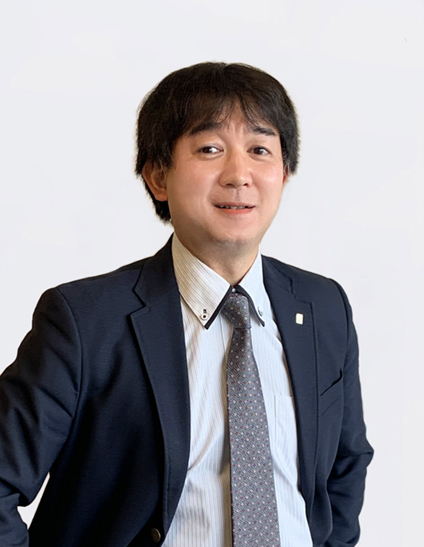
Gerhard Koberlin, now retired, is the former director of studies at the Academy of Mission at the University of Hamburg. A minister of the Evangelical Lutheran Church in Bavaria, he is a founding member of the European Network of Buddhist-Christian Studies 1996 and chairperson of the German Asia Foundation in Essen.


This article was originally published in the October-December 2006 issue of Dharma World.


back

up

back

up


Home

Copyright (C) 1997-2008 by Kosei Publishing Co.
All rights reserved.

Privacy Policy